
A twin flame is a spiritual idea: the belief that one soul can be split between two bodies, so your twin flame is the other half of your own soul, living as a separate person. Believers say you have only one, that meeting them feels like recognizing yourself, and that the bond exists to make both of you grow, which is why it is often described as intense and turbulent rather than easy.
There is no scientific evidence that twin flames exist; it is a belief, and teachers don’t agree on every detail. Below is what the term means, where it came from, the related words you’ll meet, and what to keep in mind if you think you’ve found yours. If you already have someone in mind and want to know how these connections are said to unfold, read about the eight stages of a twin flame reunion.
What Does Twin Flame Mean?
Twin flame means the other half of a single soul. The picture behind the name is one flame divided in two: each half burns on its own, but both come from the same fire. Proponents also call twin flames “mirror souls” or “twin souls,” and the Wikipedia entry on twin flames sums up the idea as two halves of the same soul incarnated separately.
Most teachers who use the term describe the same handful of features:
- One soul, two people. Your twin flame isn’t a compatible match; they are believed to be made of the same soul as you.
- Only one. You can have many soulmates in a life, but only one twin flame.
- Recognition. Meeting them is said to feel like remembering someone rather than getting to know them.
- A mirror. Because they share your soul, they are said to reflect back your strengths and your unhealed wounds, which is where the intensity comes from.
- A purpose. The bond is framed as being for growth and healing, not only for comfort or romance.
Notice what the definition doesn’t require. A twin flame doesn’t have to be a romantic partner, doesn’t have to stay in your life, and, in some teachings, doesn’t even have to be alive on earth at the same time as you. The meaning is about where a soul comes from, not about how a relationship should look.
Where Does the Idea of Twin Flames Come From?
The idea of a soul’s missing half is ancient, but the term “twin flame” is Victorian, and its modern meaning took shape in the late 20th century. The history is worth knowing, because it explains why definitions vary so much.
Plato’s Split Humans
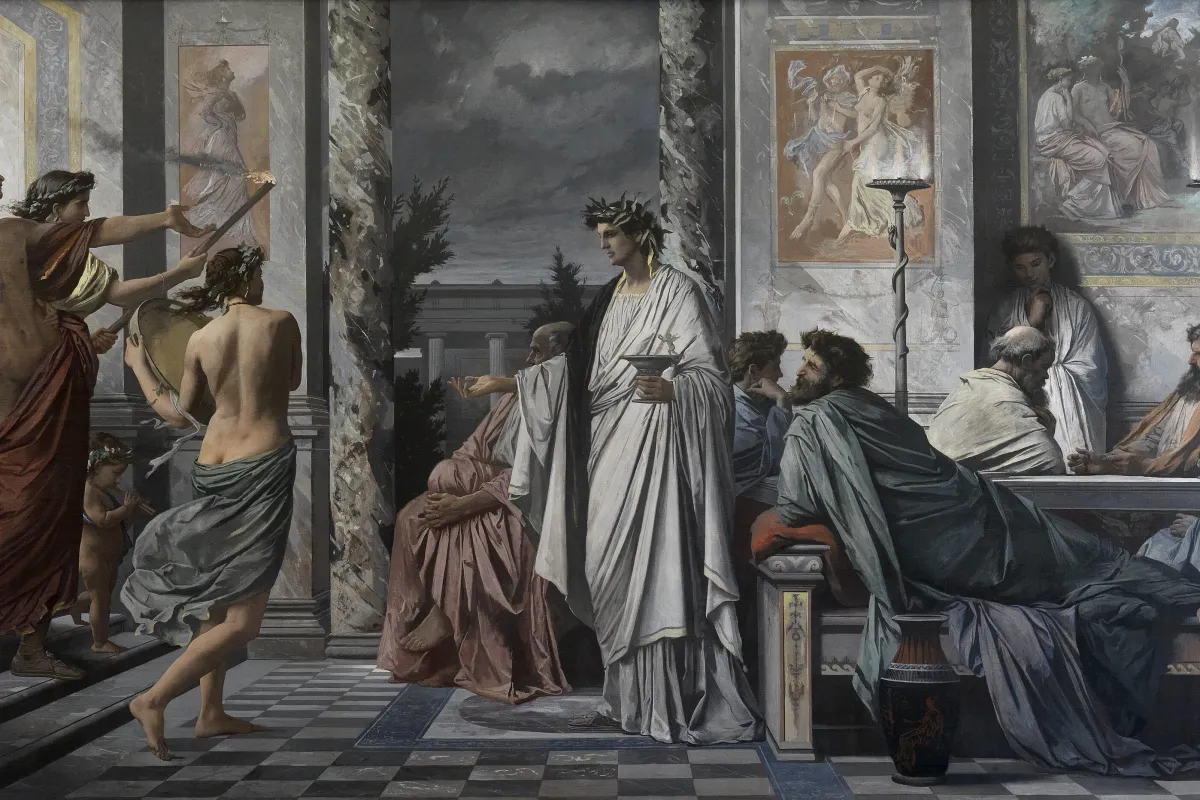
The oldest version of the “other half” story is in Plato’s Symposium, written in the 4th century BC. In it, the comic poet Aristophanes tells a myth that the first humans were double beings, with four arms and four legs, until Zeus cut them in two. Ever since, he says, each of us “is always looking for his other half,” and when two halves meet, “the pair are lost in an amazement of love and friendship and intimacy.” The speech is a playful myth inside a dialogue about love, and the word “twin flame” never appears in it, but writers on twin flames often point to it as the root of the idea.
Marie Corelli Names the Twin Flame
The English novelist Marie Corelli is credited with coining the term in her first novel, A Romance of Two Worlds (1886), where she uses “Twin-Flame” and “Twin Soul” side by side. Her meaning differs from today’s in one striking way. A character in the novel explains that many people “never find their Twin-Flame or companion Spirit at all on earth, and never will find it,” because “it is not imprisoned in clay; it is elsewhere.” For Corelli, your twin flame could just as easily be a spirit in another world as a person you might meet.
The New Age Meaning
The sense most people use now, a living person who shares your soul, was popularized from the 1970s by the American spiritual teacher Elizabeth Clare Prophet of the Summit Lighthouse. Her book Soul Mates and Twin Flames (1999), credited to her and her late husband Mark Prophet, set the twin flame apart from soulmates and karmic partners. Since then, the internet and social media have spread the term far beyond any one teacher, which is why you’ll find it used for everything from a once-in-a-lifetime partner to a very strong crush.
What Do Other Twin Flame Terms Mean?
Twin flame writing comes with its own vocabulary. These are the terms you’re most likely to meet, with what teachers usually mean by them:
- Mirror soul or twin soul: other names for a twin flame. “Twin soul” is Corelli’s older phrase; “mirror soul” stresses the reflecting.
- Divine masculine and divine feminine: the two energies each twin is said to carry. Teachers mean qualities, such as action and receptivity, not genders, so twin flames are not assumed to be a man and a woman.
- Runner and chaser: the pattern in which one twin pulls away and the other pursues. It is covered with the other stages in the runner and chaser dynamic.
- False twin flame: someone who feels like a twin flame but is described as a karmic partner, a relationship that teaches a hard lesson and ends.
- Platonic twin flame: a twin flame bond that stays a friendship. Many teachers say this is common, and the signs are described in traits of a twin flame friendship.
- Monad: in some teachings, the single source soul that both twins came from before they split.
Is a Twin Flame the Same as a Soulmate?
No. In spiritual belief a soulmate is a separate soul you feel at home with, and you can have several, while a twin flame is the other half of your own soul, and you have only one. Soulmate bonds are usually described as calm and supportive; twin flame bonds as intense and challenging. The full side-by-side comparison, including how to tell which one you’ve met, is in twin flame vs soulmate.
What Is a Twin Flame Relationship Said to Feel Like?
Believers describe a twin flame connection as instant familiarity followed by turbulence. The first meeting is said to feel like coming home, with an unusual ease of talking and a sense of having known each other before. Then, because each person reflects the other’s fears and old hurts, the bond is expected to stir up conflict, and many accounts include a period of separation before any reunion.
That sequence of recognition, testing, separation and, for some, coming back together is what twin flame teachers call the stages. Each one is explained, with how long separation is said to last, in the twin flame stages guide. People who feel their sense of self shifting through a bond like this often describe it alongside other signs of spiritual transformation.
What Should You Keep in Mind Before Calling Someone Your Twin Flame?
Keep in mind that the label describes a belief about souls, not a fact about the person in front of you. A few questions help keep the idea useful rather than confining:
- Is the intensity good for you? Highs and lows can feel like destiny. They are also how a trauma bond forms: Psychology Today describes the cycle of harm and occasional affection that makes an abusive relationship hard to leave.
- Has the other person said no? A belief that you share one soul doesn’t override their choice. Chasing someone who has asked for distance isn’t a spiritual stage.
- Are you putting your life on hold? The “only one” part of the definition can keep people waiting for years. Many teachers say a twin flame bond, if it is real, needs no pursuit and asks you to live fully in the meantime.
- Is anyone selling you a reunion? Paid “reunion” services and groups that tell you who your twin flame is have been criticized for exploiting people; the warning signs are set out in when a twin flame connection is a red flag.
The twin flame vs soulmate guide looks at what psychologists say about intensity and destiny beliefs in more depth. If you feel afraid of a partner, in the US you can call the National Domestic Violence Hotline at 1-800-799-7233 or chat at thehotline.org.
Twin Flame Meaning FAQ
Does everyone have a twin flame?
Teachers disagree. Some say every soul has a twin, since every soul is half of a pair. Others say twin flames are rare, or that most people’s twin is not incarnated in this lifetime, which echoes Corelli’s original idea of a twin waiting “elsewhere.” Either way, believers don’t treat finding your twin flame as necessary for a full life or a loving relationship. A soulmate partnership, close friendships and family bonds are all described as just as meaningful.
How do you know if someone is your twin flame?
There is no test. Believers point to a strong sense of recognition, feeling mirrored, unusual synchronicities around the person, and a bond that pushes you to change. None of these is proof, and several also fit an ordinary infatuation. Give it time: how the other person treats you over months tells you more than how the first meeting felt. The signs teachers describe for a coming reunion are listed in signs of a twin flame reunion.
Why is 11:11 linked with twin flames?
In twin flame circles, 11:11 is read as two matching ones standing side by side: two separate halves of one whole. Seeing it on a clock is taken as a nudge that your twin is near or thinking of you. Repeating numbers like this come from the wider belief in meaningful coincidence, explained in the synchronicity of numbers. A number on its own can’t confirm anything about a person.
Can a twin flame be a family member?
Many teachers say no. The twin flame is usually described as someone outside your family, met later in life, often as a partner or close friend. Family members who feel deeply familiar are more often called part of your soul family, a group of souls believed to incarnate together and help each other grow. The two ideas sit side by side: your soul family can be large, but your twin flame is said to be one.
Can your twin flame be much older or younger than you?
Yes, in the belief. Because the bond is said to be between souls, teachers place no limits on age, background, distance or gender, and many accounts describe twins meeting across large age gaps or from opposite sides of the world. What the belief can’t do is change the law or anyone’s consent: a connection that feels spiritual still has to be legal, mutual and safe for both people.
Sources
- Symposium, Plato, translated by Benjamin Jowett, The Internet Classics Archive, MIT
- A Romance of Two Worlds, Marie Corelli (1886), Project Gutenberg
- Twin flame, Wikipedia
- Elizabeth Clare Prophet, Wikipedia
- Trauma Bonding, Psychology Today
- National Domestic Violence Hotline
Image: Plato’s Symposium, Anselm Feuerbach, 1869. Public domain, via Wikimedia Commons.

