
To meditate for spiritual awakening, choose one practice from a living tradition, sit with it for 10 to 20 minutes every day, and keep at it for months rather than days. The practices below (breath awareness, loving-kindness, Zen sitting, centering prayer and self-inquiry) each come with simple steps. Traditions describe awakening as a gradual shift in how you see yourself and the world, not a guaranteed result, and meditation can stir up difficult feelings, so read the safety section before you go deep.
If you’re here because something has already started to change in you, our guide to the signs and stages of spiritual transformation covers what people commonly report. This page is about the practice itself: how to sit, what to do with your mind, how long, how often and what to expect.
How Do You Set Up a Meditation Practice?
You set it up by making it easy to repeat: same time, same place, a timer, and a posture you can hold without strain. The technique matters less at first than the habit.
- Pick a time you can keep. Early morning suits many people, but any regular slot works.
- Pick a place. A quiet corner with a cushion or chair is enough. If you want to make it a dedicated space, there are ideas in our post on meditation room ideas.
- Sit upright and comfortable. A cushion, kneeling bench or chair all work. Keep your back straight but not stiff. Lying down is fine if your body needs it, though sleep becomes likelier.
- Set a timer. Start with 10 minutes, with a gentle alarm so you aren’t checking the clock.
- Choose one practice and stay with it. Give one method at least a month before judging it.
Which Meditation Is Best for Spiritual Awakening?
The best one is the one that fits your beliefs and temperament and that you’ll actually do. Each tradition below has its own idea of what awakening is, so choosing a practice also means choosing a frame. This table is a starting point:
| Practice | Tradition | Suits you if | Start with |
|---|---|---|---|
| Breath awareness (insight) | Theravada Buddhism; modern mindfulness | You want a plain, secular-friendly method | 10 minutes daily |
| Loving-kindness (metta) | Buddhism | You are harsh on yourself or others | 10 minutes daily |
| Zazen | Zen Buddhism | You like structure and stillness | 15 minutes daily |
| Centering prayer | Christian contemplative | You pray and want silence with God | 20 minutes, once or twice daily |
| Self-inquiry | Advaita Vedanta (Ramana Maharshi) | You keep asking who you really are | 10 minutes daily |
1. Breath Awareness (Insight Meditation)
Breath awareness trains you to watch experience as it happens without being swept away by it. It comes from the Satipatthana Sutta, the Buddha’s teaching on the “frames of reference” of body, feelings, mind and mental qualities, and it is the root of vipassana (insight) meditation and of modern mindfulness courses.
- Close your eyes or lower your gaze. Take three slower breaths, then let your breathing find its own pace.
- Rest your attention where you feel the breath most clearly: the nostrils, chest or belly.
- Notice each in-breath and out-breath. Don’t control it; just know it.
- When a thought pulls you away, note it lightly (“thinking,” “planning,” “worrying”) and return to the breath. Returning is the practice, not a failure.
- In later weeks, widen your attention to sounds, body sensations and moods, noticing how each one arises and passes.
In the Buddhist view, seeing again and again that thoughts and feelings pass loosens your identification with them, which is what the tradition calls insight.
2. Loving-Kindness (Metta)
Loving-kindness meditation cultivates goodwill by repeating simple wishes for yourself and others. Its classic source is the Karaniya Metta Sutta, with its refrain “May all beings be at ease,” and metta is one of the four “immeasurable” qualities of Buddhist practice.
- Settle with a few breaths and bring to mind someone who easily makes you feel warm: a friend, a mentor, even a pet.
- Silently repeat, slowly: “May you be safe. May you be happy. May you be healthy. May you live with ease.”
- Turn the same phrases toward yourself: “May I be safe…”
- Over days or weeks, extend them to a neutral person, then someone you find difficult, then all beings everywhere.
- If no warmth comes, keep going. The intention is the practice; the feeling often follows later.
3. Zazen (Zen Sitting)
Zazen is seated meditation at the heart of Zen Buddhism. Beginners usually count or follow the breath; the Soto school moves toward shikantaza, “just sitting,” with no object of focus at all. Zen teachers describe sudden glimpses of one’s true nature, called kensho, as arising from this kind of sitting.
- Sit facing a plain wall, as Soto practitioners do.
- Keep your eyes half open, gaze resting on the floor or wall, neither focused nor closed.
- Breathe from the belly. Count each out-breath from one to ten, then start again at one. If you lose count, start at one without comment.
- After some weeks, drop the counting and simply sit, aware of everything and holding on to nothing.
4. Centering Prayer
Centering prayer is a Christian method of silent prayer developed by Trappist monks William Meninger, Basil Pennington and Thomas Keating at St. Joseph’s Abbey in Spencer, Massachusetts. It draws on older contemplative writing such as The Cloud of Unknowing, and its aim is to rest in God’s presence rather than think about God.
- Choose a short sacred word that expresses your intention to be open to God, such as “Abba,” “Love” or “Peace.”
- Sit comfortably with your eyes closed and introduce the word silently, gently.
- When you notice you’re engaged with thoughts, feelings or images, return ever so gently to the word.
- At the end, stay in silence with your eyes closed for a couple of minutes before getting up.
5. Self-Inquiry (“Who Am I?”)
Self-inquiry turns attention back on the one who is meditating. It was taught by the Indian sage Ramana Maharshi (1879–1950) in his short work Who Am I?, and in the Advaita Vedanta view he taught, holding attention on the sense of “I” lets the separate self fall away to reveal what he called the Self. It pairs well with the ideas in our guide to connecting with your higher self.
- Sit quietly and let your breathing settle.
- When a thought arises, ask, “To whom does this thought come?” The answer is “to me.”
- Then ask, “Who am I?” Don’t answer in words. Turn your attention toward the bare feeling of “I” itself.
- Rest there as long as you can. When attention drifts, return to the feeling of “I.”
How Long and How Often Should You Meditate?
Daily practice matters more than long sessions: 10 minutes every day does more than an hour once a week. A gradual build-up keeps it sustainable:
- Weeks 1–2: 10 minutes a day, same time if you can.
- Weeks 3–6: 15–20 minutes a day. Add a second short sit if you enjoy it.
- After two months: 20–30 minutes, once or twice a day.
- Retreats: days of silent, intensive practice. Go only with an experienced teacher and after a steady home practice, since intensity raises the stakes if difficult experiences come up.
Every tradition here speaks of years, not weeks. Treat meditation as part of a wider spiritual journey that includes how you live, not a technique that delivers awakening on a schedule.
What Should You Expect When You Meditate?
Expect ordinary difficulties first: a busy mind, restlessness, boredom, sleepiness and an aching back. These are normal, not signs you’re doing it wrong. Over weeks, you may catch yourself sooner when lost in a thought or mood.
Later, practitioners describe moments of deep stillness, unexpected tears or old memories, a lighter sense of self, or a feeling of connection with everything. Traditions read these differently: Buddhist teachers call such moments insight into impermanence and not-self, Zen speaks of kensho, Christian contemplatives of union with God, Advaita of recognizing the Self. These are matters of belief, not something science has measured. Most teachers also warn against chasing special experiences: what counts is how you live afterward. Changes in how you relate to others and to yourself are often described as the clearest signs of spiritual transformation.
What Does Research Say About Meditation?
Research supports some everyday benefits of meditation, though not spiritual awakening, which it doesn’t test. According to the National Center for Complementary and Integrative Health (NCCIH), studies suggest mindfulness approaches can help with anxiety and depression, may improve sleep quality, and show mixed results for pain. NCCIH also notes that many studies are small or of uneven quality, and that meditation shouldn’t replace medical care.
Is Meditation Safe? Difficult Experiences and When to Get Help
Meditation is safe for most people, but not risk-free. NCCIH reports a 2020 review in which about 8 percent of participants had a negative effect, most often anxiety or depression, a rate similar to psychological therapies.
A 2017 study by Lindahl and colleagues at Brown University, published in PLOS ONE, interviewed 60 Western Buddhist meditators from Theravada, Zen and Tibetan traditions who had faced challenges in practice. They described fear and panic, re-living traumatic memories, sensitivity to light and sound, feeling unreal or losing their usual sense of self. For some, these lasted months or years and affected work and relationships. The study chose people who had these problems, so it doesn’t show how common they are, but it shows they are real and documented in the traditions themselves.
Talk to a doctor or a qualified teacher before you start intensive practice or a retreat if you have:
- A history of trauma or PTSD
- Psychosis, bipolar disorder or past episodes of mania
- Severe depression or thoughts of suicide
- Dissociation or panic attacks
Stop or scale back and get help if you notice ongoing panic, flashbacks, not sleeping for days, feeling detached from your body or the world in a way that frightens you, hearing or seeing things others don’t, or difficulty functioning at work or home. Gentler steps often help: shorter sessions, eyes open, walking instead of sitting, grounding activities like exercise or time outdoors, and a break from retreats. See your doctor or a mental health professional, and tell them about your practice. Cheetah House is a nonprofit that supports people with meditation-related difficulties. If you are in crisis in the US, call or text the 988 Suicide & Crisis Lifeline; elsewhere, contact your local emergency number.
Spiritual Awakening Meditation FAQ
Can meditation trigger a spiritual awakening?
Many traditions teach that it can, and some people date a shift in their outlook to a period of practice or a retreat. Others describe awakenings that came through grief, illness, nature or prayer with no formal meditation at all. Meditation is best seen as preparing the ground rather than a switch: it builds the attention and openness traditions consider necessary, but no method promises a particular experience.
Do you need a teacher?
You can start alone with short daily sessions. A teacher becomes more valuable as practice deepens: to answer questions, correct misunderstandings and help if difficult experiences come up. Look for someone trained in an established lineage or program who is open about their background, doesn’t charge large sums for “awakening,” and is comfortable referring you to a doctor when needed.
What about third eye or chakra meditation?
Some yogic and New Age traditions focus attention between the eyebrows or on energy centers, believing this opens intuition. Those ideas are spiritual beliefs rather than anatomy, and the same safety advice applies. If that framework speaks to you, our post on the signs your third eye is open covers what practitioners describe.
Are guided meditations or music okay?
Yes, especially when you’re starting. A guided recording teaches the steps. Over time, most traditions encourage sitting in silence at least some of the time, because learning to stay with your own mind without a voice to follow is part of the practice.
Why do I feel worse since I started meditating?
Sitting quietly can bring up feelings you were too busy to notice, and a short-lived rise in sadness or irritability can happen. If it eases with shorter sessions and lifts within days, it’s usually part of the process. If it grows, lasts, or includes panic, flashbacks or hopelessness, pause your practice and speak to a doctor, as described in the safety section above.
Sources
- Meditation and Mindfulness: What You Need To Know, National Center for Complementary and Integrative Health (NIH)
- The varieties of contemplative experience: A mixed-methods study of meditation-related challenges in Western Buddhists, Lindahl JR, Fisher NE, Cooper DJ, Rosen RK, Britton WB, PLOS ONE, 2017
- Satipatthana Sutta: Frames of Reference, translated by Thanissaro Bhikkhu, Access to Insight
- Karaniya Metta Sutta: The Buddha’s Words on Loving-Kindness, Amaravati Sangha translation, Access to Insight
- Vipassanā, Wikipedia
- Mettā, Wikipedia
- Zazen, Wikipedia
- Centering prayer, Wikipedia
- Self-enquiry (Ramana Maharshi), Wikipedia
- Cheetah House, support for meditation-related difficulties
- 988 Suicide & Crisis Lifeline
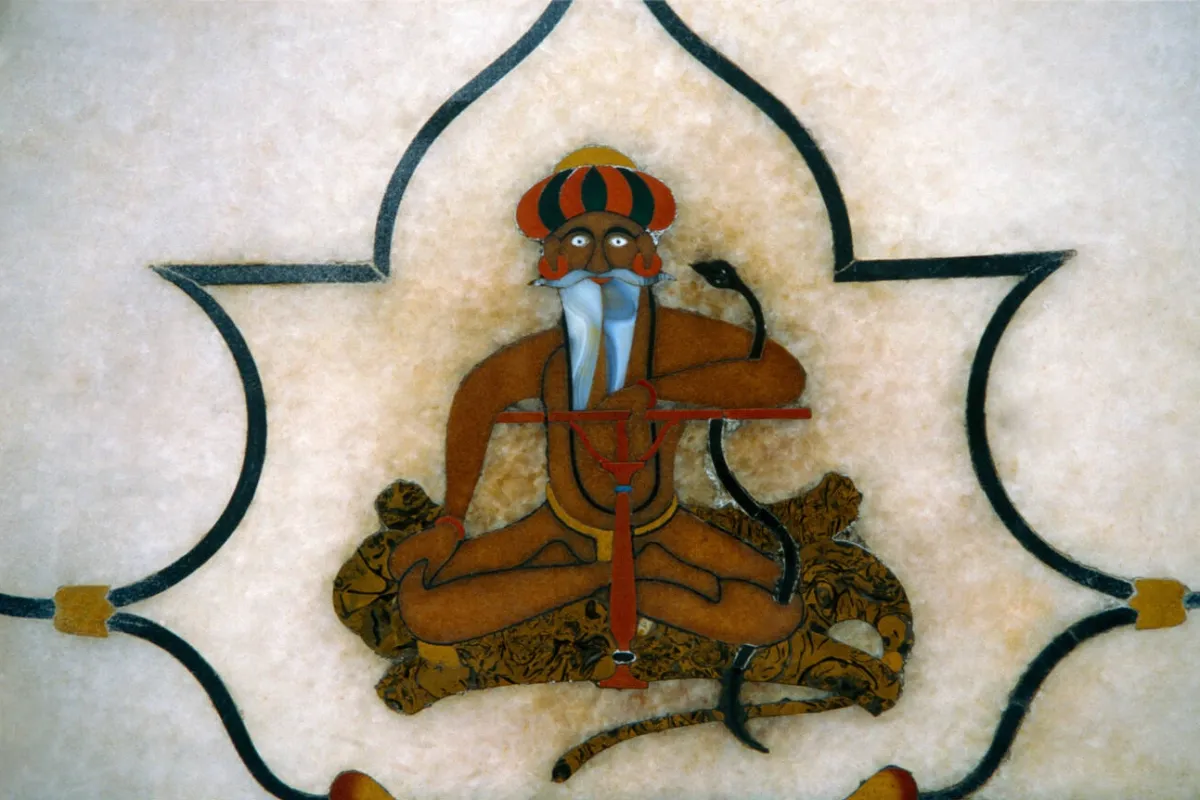
Image: Yogi meditating on an animal skin, inlaid stone (jaratkari) at the Golden Temple, Amritsar, unknown artist, early 19th century. Public domain, via Wikimedia Commons.

